Mining Other

Saudi Arabia surges to 23rd in global mining investment as exploration spending grows fivefold


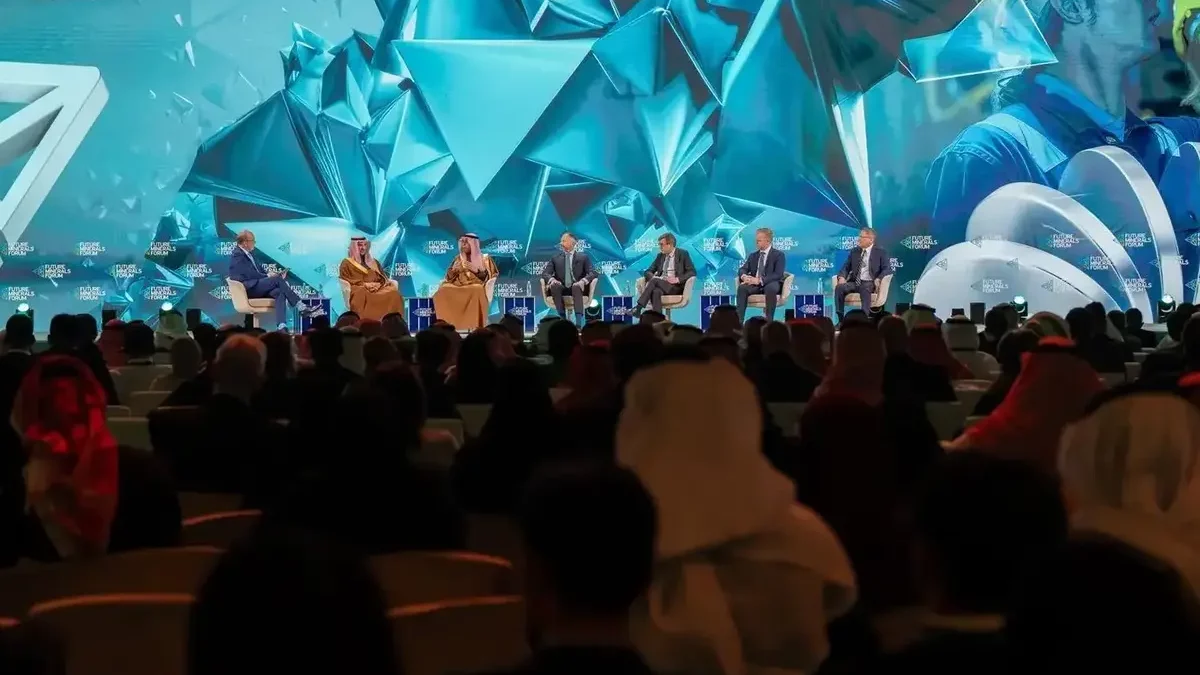
Saudi Arabia has advanced from 104th globally in 2013 as a mining destination with limited investment appeal to 23rd worldwide today, according to the Fraser Institute’s 2024 Annual Survey of Mining Companies. This shift reflects Saudi Arabia’s emergence as a leading mining investment destination and firmly positions mining as the third pillar of national industry, in line with Vision 2030.
This progress was highlighted by Eng. Khalid Al‑Mudaifer, Vice Minister of Industry and Mineral Resources for Mining Affairs, during the opening day of the Future Minerals Forum (FMF). The vice minister made the remarks during a panel discussion titled “The great catch up: Global mineral supply resilience and new market creation” held as part of the FMF 2026 program and attended by senior leaders from the global mining and finance industries.
Critical minerals and rare earth elements essential for development
Al‑Mudaifer said Saudi Arabia’s mining sector has undergone a “profound and unprecedented transformation,” moving from the margins of global competitiveness to one of the world’s leading destinations for mining capital.
Addressing the changing global landscape, Al‑Mudaifer said that sustaining economic growth now requires far more than traditional base metals such as aluminum, copper and iron. Modern economies, he explained, depend increasingly on specialized and critical minerals, including rare earth elements, tin, tungsten, tantalum and gallium. While these may account for a smaller share of revenue than bulk commodities, they are indispensable inputs for electric motors, drones, computers and digital technologies.
The vice minister stressed that high price volatility and relatively small market size make investment in these minerals inherently risky, reinforcing the need for targeted government intervention. He noted that such intervention should not be limited to providing essential infrastructure, such as energy and water, but should also include innovative tools, including the National Minerals Program adopted by the Kingdom, to mitigate risks, secure financing and ensure continuity of supply.
Saudi Arabia’s exploration spending rises fivefold in five years
Al‑Mudaifer disclosed that Saudi Arabia’s exploration spending has increased fivefold over the past five years. Expenditure has risen from less than $28 (SAR105) per square kilometer in 2020 to approximately $144 (SAR539) per square kilometer in 2024, exceeding targets originally set for 2025.
He emphasized that Saudi Arabia’s mining strategy, which was launched in 2018, is not limited to extraction, noting that it is designed to build a fully integrated mining ecosystem, including developing young Saudi talent, strengthening institutional capacity, and ongoing efforts to establish a commodities exchange to support trading in emerging minerals.
Al‑Mudaifer called for deeper international partnerships, stating that just as Saudi Arabia built its oil and petrochemicals sectors through collaboration with global partners, it is now applying the same partnership‑driven model to mining.
The Kingdom, he said, is positioning itself as a global hub for mining innovation, advanced technologies and venture capital, and intends to play a central role in shaping the future of the global minerals industry.
Related Articles
Endeavour announces transaction in own shares...
10 Sep, 2024 07:27
Ivanhoe Mines Announces MOU with Government of Zam...
10 Sep, 2024 12:24
Feasibility Study on Lumwana Super Pit Expansion E...
12 Sep, 2024 14:21
Endeavour achieves commercial production at BIOX e...
13 Sep, 2024 08:20
Roscan Gold Announces Changes to the Board of Dire...
16 Sep, 2024 10:40
Minerals Council pays tribute to Pravin Gordhan...
16 Sep, 2024 12:17
Notification of an acquisition of beneficial inter...
18 Sep, 2024 08:39
Newmont on track to get at least $2 billion from a...
18 Sep, 2024 10:49
UAE firm plans to invest $500m in Tanzania...
19 Sep, 2024 08:37