Mining Other
Saudi Arabia awards exploration licenses for nation’s first mineralized belts


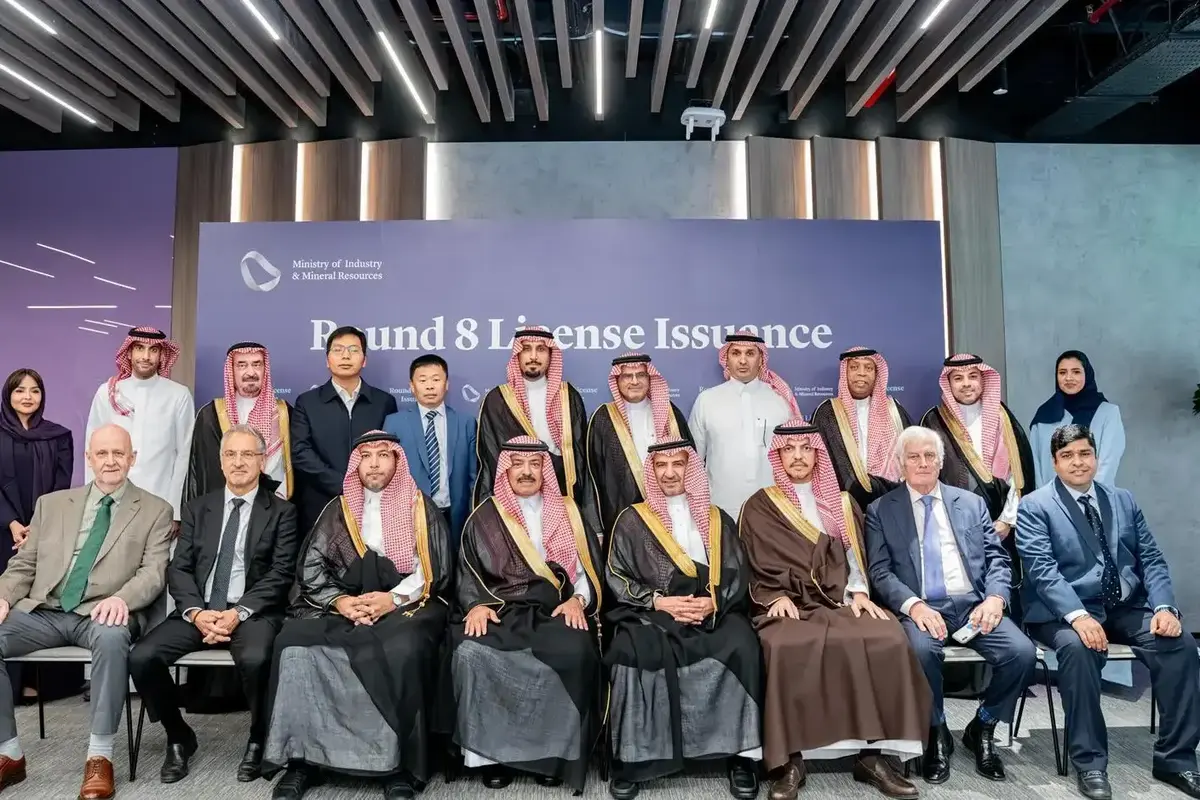
Saudi Arabia's Ministry of Industry and Mineral Resources has awarded exploration licenses for the nation's first mineralized belts, located at the Jabal Sayid and Al Hajar sites. These two sites cover a vast combined area of 4,788 square kilometers and are known to be rich in key minerals including copper, gold, silver, lead, and zinc. The licenses were granted to a mix of local and international companies through a competitive and transparent bidding process based on clear technical and financial criteria.
This milestone was highlighted by Khalid Al-Mudaifer, the Vice Minister for Mining Affairs, who stated that it marks a new phase of growing maturity for the Saudi mining sector under the Kingdom's Vision 2030 economic diversification plan. The strategic goal is to progress beyond simple exploration and extraction to developing fully integrated value chains. This means linking upstream mining projects with intermediate processing and downstream manufacturing industries within the country to maximize economic benefit.
The announcement is part of Saudi Arabia's ongoing global promotion of its mining sector. A key part of this strategy is hosting the fifth Future Minerals Forum in Riyadh in January 2026, an event designed to attract ministers and CEOs from leading global mining companies and solidify its position as a premier international platform for the industry.
The significance of this development is underscored by a recent major reassessment of the Kingdom's mineral wealth. Earlier this year, Minister Bandar bin Ibrahim Alkhorayef announced that the estimated value of Saudi Arabia's mineral resources has surged by 90 percent, reaching SAR 9.375 trillion (approximately $2.5 trillion), up from the SAR 5 trillion estimate in 2016.
This substantial increase is attributed to several factors, including the discovery of new deposits of rare earth elements and transition metals, alongside significant increases in known resources of phosphate ore, copper, zinc, and gold. The revised figure also reflects a reassessment of commodity prices, indicating a more comprehensive and modern valuation of the nation's subsurface assets.
The success in attracting exploration investment is also credited to the new Mining Investment Law. This regulatory reform has had a tangible impact, causing the number of issued exploration licenses to quadruple over the past three years compared to the six years preceding the law. Furthermore, it has spurred a significant increase in exploration spending, which has risen from SAR 70 to SAR 180 per square kilometer, demonstrating enhanced investor confidence.
In summary, the awarding of these licenses for the first mineralized belts represents a concrete step in Saudi Arabia's ambitious plan to transform its mining sector into a third pillar of its economy alongside oil and gas. By creating a transparent and attractive investment environment and focusing on building domestic value chains, the Kingdom is positioning itself as a new global player in the minerals market.
Related Articles
Endeavour announces transaction in own shares...
10 Sep, 2024 07:27
Ivanhoe Mines Announces MOU with Government of Zam...
10 Sep, 2024 12:24
Feasibility Study on Lumwana Super Pit Expansion E...
12 Sep, 2024 14:21
Endeavour achieves commercial production at BIOX e...
13 Sep, 2024 08:20
Roscan Gold Announces Changes to the Board of Dire...
16 Sep, 2024 10:40
Minerals Council pays tribute to Pravin Gordhan...
16 Sep, 2024 12:17
Notification of an acquisition of beneficial inter...
18 Sep, 2024 08:39
Newmont on track to get at least $2 billion from a...
18 Sep, 2024 10:49
UAE firm plans to invest $500m in Tanzania...
19 Sep, 2024 08:37