Distribution

Kuwait pipeline sale is a toe in the water for foreign investors


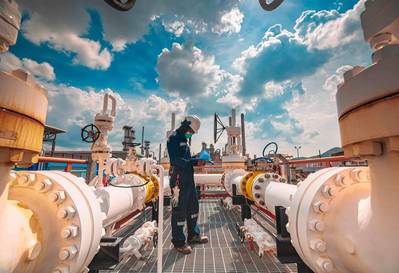
Kuwait’s plan to sell a stake in its oil pipeline network this month echoes similar transactions in the GCC and beyond in recent years.
Industry sources said the deal – likely to be a leasing of the pipelines followed by a leaseback – could be worth $7 billion. But the transaction is about far more than the money. Kuwait is signalling that it is becoming more open to foreign investment in its oil and gas industries, and that could allow for a big increase in oil production.
Kuwaiti laws have for decades discouraged foreign investment in the sector, hamstringing development. As a result, the emirate hasn’t been able to increase production capacity in line with its peers.
The UAE increased capacity to 4.85 million barrels per day in 2025 from 2.9 million bpd in 2010, while capacity in Kuwait, which has significant development potential, fell and then recovered over the same period. Capacity at Kuwait Petroleum Company (KPC) was only 3.2 million bpd in 2025, down slightly from its 2010 peak of 3.3 million bpd.
International oil companies (IOCs) prefer to invest under production-sharing contracts, under which they can book reserves on their balance sheets and then borrow against these assets. However, because Kuwait’s constitution bars foreign ownership of natural resources, IOCs have had to operate there under technical service agreements, which offer weaker incentives.
Given the choice, an IOC with a production-sharing agreement in one country and a services agreement in Kuwait may well allocate more and better resources to the country offering production-sharing. Kuwait’s government tried to offer enhanced service agreements to IOCs 20 years ago under Project Kuwait – a programme to develop 450,000 bpd in new capacity in its northern oilfields – but the efforts were blocked by parliament.
In 2024 the then newly enthroned Emir Mishal Al-Ahmad Al Sabah dissolved parliament, and the government is now making a fresh push to attract foreign investment across the economy. Inbound foreign direct investment averaged just 0.5 percent of GDP in 2020-24, well below the GCC average of 2.7 percent. Better terms in oil and gas are potentially part of improving on that.
Foreign money is welcome, but Kuwait already has a $1 trillion sovereign fund (roughly $675,000 per citizen) and runs large surpluses every year. What Kuwait’s oil sector needs is committed interest from IOCs and other foreign companies, enabling the transfer of technology and expertise to help Kuwait make the most of its oil.
The pipeline deal itself should be relatively uncontroversial. It is likely to be structured as a lease-and-leaseback agreement similar to those used by Saudi Aramco in 2021 and 2022 in respect of its oil and gas pipelines. Foreigners will not own any of Kuwait’s natural resources.
Nevertheless, when Kuwaiti prime minister Ahmed Abdullah Al Sabah announced the deal on February 4 at an industry conference, he was keen to stress that foreigners would have no operational control over the pipeline and that the network would remain 100 percent owned by KPC.
Foreign investors will be interested in a pipeline sale. A lease-and-leaseback structure provides financial institutions with good visibility into cashflows over the life of an agreement. BlackRock, China Merchants Capital and Abu Dhabi’s Mubadala invested in the Saudi pipeline deals, together worth $27.9 billion.
The signal, then, is powerful. Foreign investors are now more welcome to invest in Kuwait’s oil industry. But attracting IOCs to stump up cash upstream is very different from selling a share in future cashflows to foreign financial investors.
Al Sabah said on February 4 that Kuwait wanted to bring IOCs in to develop recent offshore discoveries – the Nokhatha, Jazah and Julaia fields – and so lift capacity to 4 million bpd by 2035.
Kuwait’s challenge is to give the IOCs enough skin in the game to engage without shattering long-standing taboos on foreign ownership.
Related Articles
World Bank Backed Fund targets solar energy projec...
09 Sep, 2024 13:34
Libya oil exports plunge as NOC cancels cargoes du...
12 Sep, 2024 08:31
Caterpillar introduces groundbreaking dynamic ener...
18 Sep, 2024 07:42
Saudi Arabia strikes $1 bln deal as aluminum drive...
18 Sep, 2024 09:03
Egypt and Petronas Discuss Expanding LNG Investmen...
19 Sep, 2024 13:00
6 Regional Banks Transforming Africa’s Oil & Gas I...
20 Sep, 2024 13:00
Giyani Metals advances battery-grade manganese dem...
30 Sep, 2024 09:20
Middle East tensions spike oil prices, but surge w...
01 Oct, 2024 07:59
Uganda receives first batch of line pipes for EACO...
01 Oct, 2024 09:21