Base Metals

Global demand for Africa’s base metals on the up



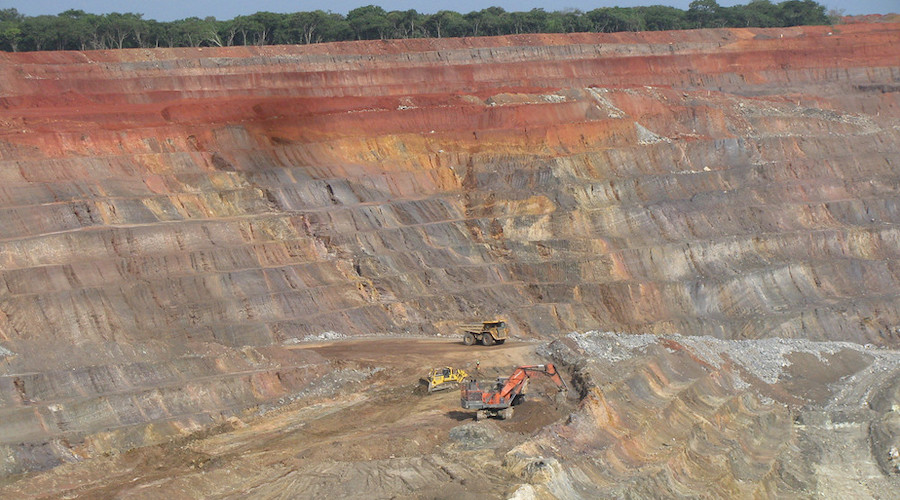
Alongside the world’s biggest cobalt reserves, Africa hosts top-tier resources in the Central Africa Copperbelt, with exceptional grades.
Globally, inflationary pressures from higher energy prices, labour costs and equipment material costs could tighten mining profit margins, with only large-scale and high-grade operations being able to handle the cost increases, adds McFarlane.
Africa is not immune, with high power tariffs, including diesel generator costs, effecting major costs for Africa’s base metals sector, thereby raising the cost per tonne for the mining, processing and smelting of base metals ore.
Deeper and more complex mines, such as some Zambian underground sections, will operate with slimmer margins, she elaborates.
Another contributing factor is logistics. As many African mines are inland, these operations will need to sustain increases in trucking costs for concentrates and cathodes, should they export such materials.
African base metals producers generally have a cost advantage though, owing to most continental mines having high grades and implementing new technology and automation to improve efficiency in extraction. Several African mines also benefit from scale, with fixed costs spread over growing volumes.
Tax incentives or power agreements are also “greatly assisting in project economics” in certain instances and jurisdictions, she adds.
Navigating Regional Challenges
To position companies for long-term success amid these dynamics, McFarlane says collaborative agreements and partnerships are crucial for the mitigation of a variety of risks, accessing new markets and ensuring long-term operational stability and social acceptance of base metals mining operations.
“Partnerships provide support to navigate complex regulatory landscapes, drive compliance with environmental and social standards, and reduce the likelihood of operational disruptions,” she says.
Further, industry-wide collaboration with government bodies and regulators can lead to more stable, streamlined and predictable policy environments, which enhances the attractiveness of a jurisdiction for capital, suggests McFarlane.
The growth of Africa’s base metals supply chain, and access to capital markets through strategic partnerships and joint ventures, is especially applicable to junior miners, which face capital-rising challenges, she says.
While strategic diversification and supply chain resilience are key themes in investor decision-making, African countries will need to carefully consider their role in base metals markets, suggests McFarlane.
This includes the approach taken to reform, with the long-term or continuous improvement of mining codes potentially yielding the intended benefit to governments.
“Generally, regulatory clarity is a key requirement to attract investment across African mining jurisdictions. However, the maturity of regulatory frameworks varies, including how much accountability is expected from mining operators,” she says.
Any regional instability could also undermine the importance of environmental, social and governance compliance.
Deloitte Africa technical mining advisory leader Stewart Nupen emphasises that where guidelines are not well established or regulatory clarity is not fully in place, global standards could be leveraged to enforce compliance, although all participants would need to assume a role in driving compliance.
“Even in mature operating environments, there is a need to build capacity for monitoring and implementation of standards,” he says.
African Majors
Across the Democratic Republic of Congo (DRC) and Zambia, major projects include natural resource companies Glencore’s Kamoto and Mutanda copper/cobalt operations, copper producer China Nonferrous Mining Corporation’s Mabende project and mining company Ivanhoe Mines’ Kamoa-Kakula operation.
Nupen highlights that, in 2024, the DRC was the second-largest producer of copper, after Chile, with Zambia remaining in the top ten copper-producing regions.
In South Africa, there is mining company Palabora Mining’s Palabora Copper mine, in Phalaborwa, and Copper 360’s Rietberg mine, in the Northern Cape.
Other significant base metal operations include zinc reserves at Ivanhoe’s Kipushi mine, in the DRC; Vedanta Zinc International’s Gamsberg mine, in the Northern Cape of South Africa; and nickel and cobalt miner Ambatovy’s Madagascar mine.
“Notwithstanding the complexities, the continent is the host of top-tier resources and reserves, as well as being geologically prospective, and will attract investment because of this endowment,” concludes Nupen.
Related Articles

Sanu Gold Announces $5 Million Private Placement L...
06 Sep, 2024 13:08
Ivanhoe Mines produces 40,347 tonnes of copper at ...
09 Sep, 2024 09:21
Andrada partners with SQM to develop Namibia lithi...
10 Sep, 2024 08:56
US, Saudi Arabia in talks to secure metals in Afri...
10 Sep, 2024 09:07
DRC: Eurasian Secures $150 Million to Develop a Co...
12 Sep, 2024 06:22
Zambian mines desperate for power turn to a surpri...
13 Sep, 2024 11:18
Africa at the cusp of a critical minerals boom...
17 Sep, 2024 07:40
Coolabah to unite Broken Hill assets, paving path ...
17 Sep, 2024 08:40
Marula Mining completes first manganese exports sa...
18 Sep, 2024 09:05