Distribution

Aramco Harnesses Autonomous AI to Transform Gas Plant Operations


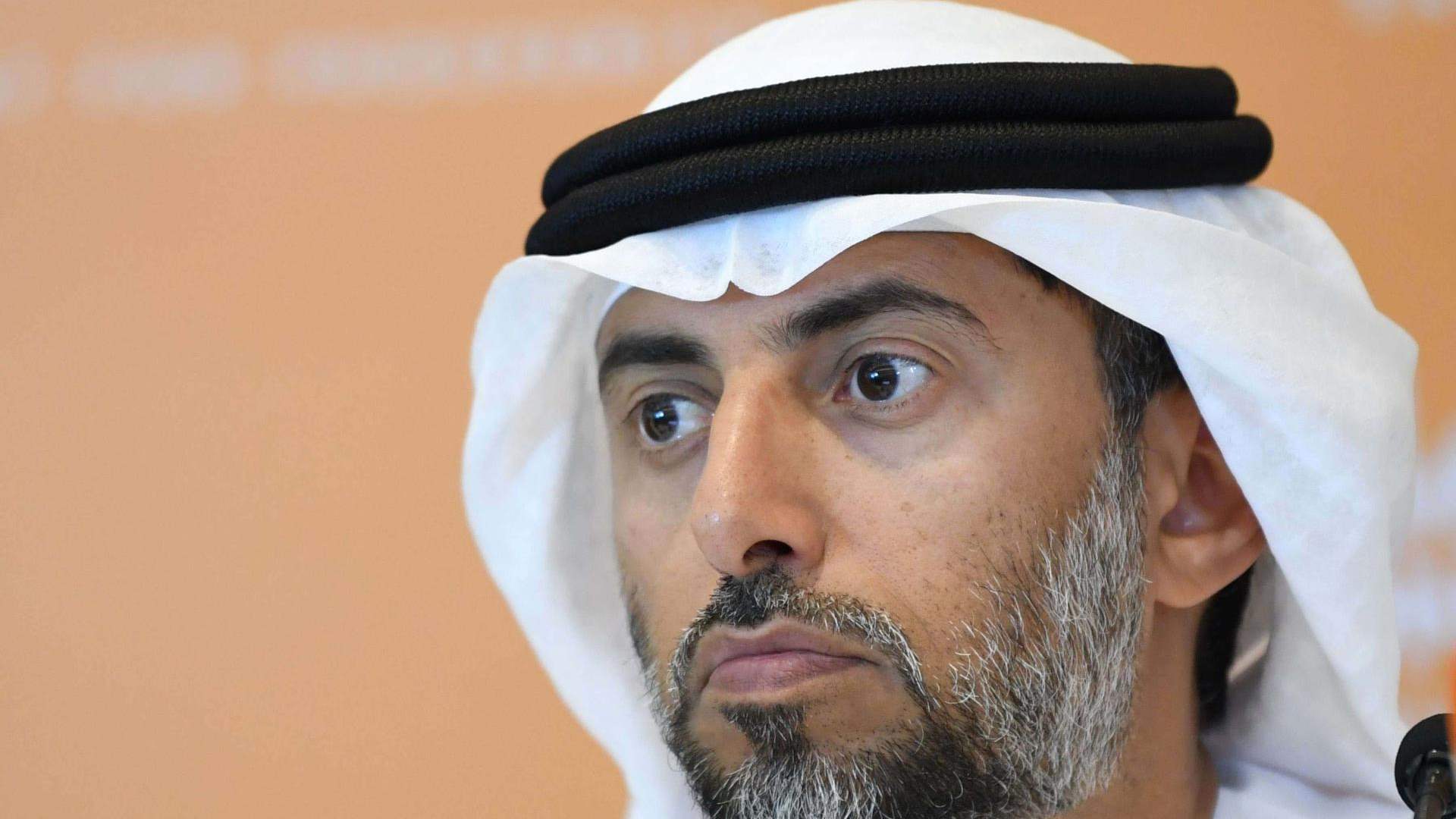
In an era where artificial intelligence is redefining industrial operations, Aramco is leading the charge. Khalid Y. Al Qahtani, Senior Vice President of Engineering Services at Aramco, shares how the company is leveraging autonomous AI agents to transform gas processing and industrial automation.
From the Fadhili Gas Plant to the Hawiyah NGL facility, Al Qahtani explains how AI is not just supporting decisions—it’s taking them, driving efficiency, reducing energy use, and shaping the next generation of operational excellence.
How is Aramco currently using AI across its operations?
Technological innovation has long played a central role in Aramco’s strategy, but new capabilities enabled by advanced AI solutions are already demonstrating their potential to unlock even greater operational efficiencies on an industrial scale.
Khalid Y. Al Qahtani, Aramco Senior Vice President of Engineering Service
The shift is well underway. The integration of AI with process automation technologies is no longer confined to research and development. The technologies are active and measurable, and they are increasingly making decisions in real time.
AI is not simply analysing data or generating recommendations; it is now embedded into processes themselves.
Nowhere is this shift more evident than at the Fadhili Gas Plant, a major gas processing hub in Saudi Arabia’s Eastern Province.
How has AI proved so transformative at Fadhili?
Fadhili handles up to 2.5 billion standard cubic feet of raw gas per day from onshore and offshore fields. Before that gas can be transferred, it must be treated to remove impurities such as hydrogen sulfide and carbon dioxide.
Until recently, this complex process was managed entirely by conventional automation technologies, with oversight by and guidance from experienced human operators. Now, in partnership with Japanese automation specialist Yokogawa, we have deployed multiple autonomous AI agents in the acid gas removal (AGR) operations at Fadhili Gas Plant that are self-learning and self-adaptive to control key stages of the treatment process in real time.
The system, based on Yokogawa’s reinforcement learning-based AI algorithm known as Factorial Kernel Dynamic Policy Programming (FKDPP), is a major development in industrial AI: the coordinated, real-time control of a key process by autonomous agents.
These agents draw on more than 30 critical process parameters to adjust variables such as the temperature and circulation rate of amines — chemical compounds used to absorb hydrogen sulfide and carbon dioxide during gas treatment. Fine-tuning these conditions can improve the efficiency with which impurities are removed, positively impacting operational performance.
The results have already exceeded expectations, with a reduction of up to 15% in amine and steam usage, a 5% reduction in power consumption, greater process stability, and far less need for manual intervention.
Are you rolling out this approach to other plants?
The deployment at Fadhili Gas Plant is not a standalone pilot. We are now exploring how to extend the approach across the wider gas treatment network, positioning autonomous control as a core capability in our next-generation operations model.
If Fadhili Gas Plant shows what AI can do in one unit, the Hawiyah NGL (natural gas liquids) facility, close to the Ghawar oil field, demonstrates its potential for an entire plant. At Hawiyah, the engineering team is now supported by Operations Copilot — an in-house AI system that delivers tailored recommendations to control-room teams.
How does Operations Copilot work, and how has it improved operations?
Operations Copilot blends physics-informed models with machine learning and live operational data to continuously provide clear recommendations that maximise the plant’s profitability and efficiency in real-time. It allows operators to respond quickly to variables such as fluctuating feedstocks and shifting ambient temperatures.
The system has improved coordination between units, reduced energy consumption and emissions, and increased higher-value product yields. More fundamentally, it has changed frontline decision-making, replacing reactive adjustments with proactive, data-driven guidance.
In time, Operations Copilot is expected to evolve from decision support to autonomous execution, where AI recommends adjustments and implements them directly, building on the successful implementation of autonomous control we achieved at the Fadhili Gas Plant.
What are your future ambitions for AI?
Our AI strategy also aims to strengthen Saudi Arabia’s broader digital economy. With its scale, data infrastructure, and technical talent, the company is well-positioned to drive the adoption of AI across energy, manufacturing, and other sectors that are central to the Kingdom’s long-term development goals.
The depth and scale of ambition are emphasised by the World Economic Forum’s inclusion of five key Aramco facilities as part of its prestigious Global Lighthouse Network. The fifth site, the North Ghawar oil-producing complex, was added in January 2025 in recognition of its program to integrate digital sensing, learning, and control into complex industrial environments.
No other energy company has this many facilities in the Global Lighthouse Network, which celebrates manufacturers that have adopted Fourth Industrial Revolution technologies, such as AI, robotics, and advanced analytics, at scale — helping set new standards in manufacturing.
For Aramco, AI is a foundation on which transformational projects can be built. The move from insight to autonomy is reshaping how we design, operate, and optimise our facilities, from intelligent guidance being embedded into daily workflows at Hawiyah NGL to AI agents now managing live industrial processes in real time at Fadhili Gas Plant. Across the portfolio, we are scaling the systems and talent necessary to usher in a new era of industrial intelligence.
This isn’t just about improving performance. It’s about transforming decision-making itself, making our operations faster, safer, and more efficient — and harnessing advanced AI capabilities to capture even greater value.
For Aramco, AI is more than a technological upgrade—it is a strategic foundation for industrial intelligence. As Khalid Y. Al Qahtani highlights, the company’s deployment of autonomous agents and decision-support systems is reshaping how operations are managed, making processes safer, faster, and more efficient. With ambitions extending beyond individual plants to the broader Saudi digital economy, Aramco is demonstrating how AI can drive measurable value at scale, paving the way for a new era of smart, autonomous operations.
Related Articles
World Bank Backed Fund targets solar energy projec...
09 Sep, 2024 13:34
Libya oil exports plunge as NOC cancels cargoes du...
12 Sep, 2024 08:31
Caterpillar introduces groundbreaking dynamic ener...
18 Sep, 2024 07:42
Saudi Arabia strikes $1 bln deal as aluminum drive...
18 Sep, 2024 09:03
Egypt and Petronas Discuss Expanding LNG Investmen...
19 Sep, 2024 13:00
6 Regional Banks Transforming Africa’s Oil & Gas I...
20 Sep, 2024 13:00
Giyani Metals advances battery-grade manganese dem...
30 Sep, 2024 09:20
Middle East tensions spike oil prices, but surge w...
01 Oct, 2024 07:59
Uganda receives first batch of line pipes for EACO...
01 Oct, 2024 09:21