Mining Other

Africa urged to move from critical-minerals rhetoric to tangible development


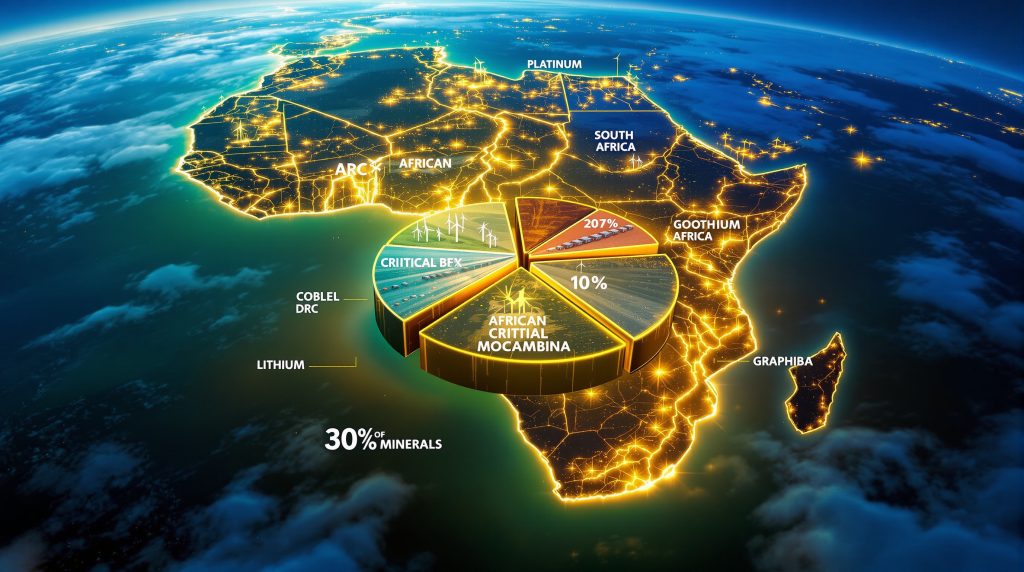
Hence, when policymakers, industry leaders, and development financiers converge at platforms such as the recent Investing in African Mining Indaba 2026 in Cape Town, the message is increasingly clear: Africa must move beyond pronouncements about its mineral wealth and focus on implementation, infrastructure development, and strategic value addition.
From policy innovation to international investment, African nations are beginning to align resources, governance, and strategy to capture the full benefits of their mineral endowment. Nonetheless, significant barriers persist, including bureaucratic delays in licensing, inadequate infrastructure, underdeveloped value chains, and competition for foreign investment. At the same time, new opportunities are emerging, including small- to medium-sized enterprise (SME) financing, cross-border corridor development, and innovative policy tools designed to optimise domestic benefits from critical minerals.
Walk the Talk
Anglo American CEO Duncan Wanblad is among those emphasising the urgency for African governments to move from policy intent to tangible implementation. For instance, he noted at the Mining Indaba that the continent had long been lauded for its “incredible potential” and that conditions for unlocking that potential were now increasingly aligned.
Wanblad highlighted the Lobito Corridor – a 1 300 km rail link connecting the Angolan port of Lobito to Katanga in the Democratic Republic of Congo and the Zambian Copperbelt – as a model for how infrastructure and regional integration can drive value creation. He urged African governments to continue developing cross-border corridors such as this that integrated power pools, harmonised customs processes, and established governance structures that enable action rather than delay it.
“Surely, value-addition and beneficiation are crucial here. However, they must be economically viable, because it rarely makes sense to replicate each step of the value chain everywhere. The opportunity lies in planning corridors intelligently, allocating activities where they make the most sense, and then investing accordingly. This is how Africa can unlock the full potential of its mineral endowment and turn potential into lasting prosperity,” Wanblad said.
The scale of investment required is substantial, with hundreds of billions of dollars necessary to develop the infrastructure and integrated value chains needed to realise Africa’s mineral ambitions. However, such investment would flow only where policy environments were stable, licensing processes predictable, and risk-sharing mechanisms credible.
Technical Assistance
Creating such ecosystems may find some support through the fact that global development financiers are increasingly focusing on Africa’s critical minerals as a strategic priority.
For instance, the European Investment Bank’s (EIB’s) international arm, EIB Global, recently signed cooperation agreements with tin and lithium producer Andrada Mining and graphite resource developer EcoGraf, providing up to €2-million in technical assistance to advance feasibility-stage projects in Namibia and Tanzania.
The assistance will cover Andrada’s engineering and mineral testing, infrastructure assessments, and environmental and social risk evaluation. EcoGraf will receive support for processing facilities, sustainable waste and water management, and integration into the EU battery value chain.
“We work with partners across Africa to help turn promising projects into bankable investments. By supporting early-stage technical work, we help build reliable and sustainable critical raw material value chains that benefit both Africa and Europe,” EIB VP Karl Nehammer said.
European Commissioner for International Partnerships Jozef Síkela noted that there was rising European demand for critical raw materials.
“Through Global Gateway, we are building secure and sustainable supply chains by investing early in projects that create value locally, meet high environmental standards, and deliver reliable access for European industry. These partnerships show how cooperation with Africa can strengthen both local development and Europe’s economic security,” he said.
Domestic Imperatives
While international finance and support are critical, South African mining industry practitioners and commentators have emphasised that the country cannot rely solely on global demand to define its critical minerals strategy.
The Centre for African Mineral Value Chains (CAMVaC), the policy research arm of ESG Frontiers, has developed the Linkage-Based Criticality Matrix (LBCM™), a tool designed to measure minerals’ domestic economic importance.
“We’re seeing a pattern where criticality is defined by what’s scarce to others, not by what’s vital to us. That logic may serve global supply chains but it risks undermining the systems we’re trying to build at home,” CAMVaC director Fulufhelo Lloyd Nedohe said.
Applying the LBCM™ to South Africa, coal remains a critical mineral, powering about 80% of electricity, supporting petrochemicals company Sasol’s coal-to-liquids process and sustaining 80 000 to 110 000 direct mining jobs.
However, with global net-zero commitments accelerating, coal exports are projected to fall by about 50% by 2035. Manganese is identified as a strategic successor, particularly for lithium-manganese-iron-phosphate battery production, which could unlock more than R50-billion in additional value, create more than 50 000 jobs, stimulate local innovation, and reduce dependence on foreign processing.
“This is not about replacing national strategies. It’s about completing them. The LBCM™ helps us ask: If we remove a mineral, what collapses? What must be rebuilt? And who bears the cost?” Nedohe said.
CAMVaC plans further engagement with labour, government, and development finance institutions in 2026 and is working with neighbouring States, including Namibia and Zimbabwe, to harmonise approaches to critical mineral assessment across the region.
Critical Relations
As South Africa’s trade relations with the US continue to weaken, the UK government has been deepening its engagement in South Africa’s critical minerals sector.
At the Mining Indaba, the UK confirmed a £2-million impact finance facility with Anglo American to expand SME access to finance in South Africa, with the goal of creating 5 000 jobs. The facility, delivered through the Impact Finance Network, is designed to mobilise at least three times additional investment from other funders and recycle repayments to maximise long-term impact.
British High Commissioner to South Africa Antony Phillipson said the UK’s Critical Minerals Strategy, which was launched during the Johannesburg G20 Summit, sets out a clear vision for resilient, diversified supply chains, underpinned by long-term collaboration with global partners.
“This work forms a central pillar of the UK’s wider Africa approach, which prioritises partnerships based on equality, mutual benefit, and responsiveness to African governments’ stated priorities,” Phillipson said.
UK support includes expertise in mining, engineering, professional services, finance, environment, social and governance (ESG) standards, traceability, and community- centred development. By building coalitions and focusing on regional collaboration, the UK aims to strengthen sustainable and responsible supply chains that deliver shared benefits for Africa and global markets.
Barriers Remain
Despite the progress and international interest, several constraints continue to hold Africa back – particularly South Africa – from fully capitalising on its critical minerals endowment.
Mineral and Petroleum Resources Minister Gwede Mantashe acknowledged in February that South Africa’s sluggish development of a reliable cadastre for exploration and licensing was exacerbating illegal mining and contributing to the ongoing decline of the junior mining and exploration sector.
“If we don’t ramp up exploration, additional and junior mining will be replaced by unregulated activity,” Mantashe said, highlighting the urgency of improving administrative and policy mechanisms.
Data show that only 358 prospecting rights and 32 mining rights were granted over the past year, reflecting the slow pace of formal approvals. South Africa’s share of global exploration investment has fallen from 5% two decades ago to less than 1% today, indicating a dramatic loss of investor confidence.
Mantashe stressed that modernising the digital cadastre and improving data quality were essential to accelerating exploration and licensing processes.
US Trade and Development Agency (USTDA) deputy director Thomas Hardy also noted that critical minerals projects are inherently complex, often involving variable grades and challenging orebodies.
“Transparency really isn’t optional,” he said, emphasising regulatory compliance, proper procurement, and engagement with local communities as prerequisites for funding support.
Positive Steps
Despite the challenges, several initiatives illustrate the potential for Africa to realise its critical minerals ambitions.
In addition to international technical assistance and SME financing, South Africa’s CAMVaC initiative is helping policymakers identify minerals with the highest domestic economic linkages. Manganese, for example, is poised to become a key driver of green industrialisation, linking local jobs, innovation, and global battery markets.
The Lobito Corridor demonstrates how cross-border infrastructure can facilitate efficient value chains and regional integration, attracting large-scale investment in a predictable policy environment. Similarly, coordinated efforts by the UK and the EU aim to strengthen responsible mineral production while linking African projects to European clean energy supply chains.
Mantashe also highlighted the importance of harmonising African policies to prevent countries from competing destructively for investment. He argued that partnerships must extend beyond extraction to industrialisation, with value addition occurring close to production and regional frameworks guiding the entire continent.
“This is why, in our critical minerals, we are also having coal as one of them. On other continents, it’s a dirty product. For us, it’s quite an important product because it employs many people and it earns foreign earnings, and it does many things in Africa. So, we must not be following the fashion of others. We must assess the impact on our own continent,” he said.
From Rhetoric to Results
South Africa and the broader African continent stand at a pivotal moment in critical minerals development. The combination of domestic policy innovation, international investment and technical assistance, SME support, and regional integration presents a framework for translating mineral wealth into sustainable economic and industrial outcomes.
However, overall consensus seems to be that the continent must confront persistent bottlenecks – slow licensing, weak infrastructure, regulatory uncertainty, and fragmented regional policies – to realise this potential.
Strategic planning, value-chain intelligence, and credible governance have been deemed essential to attract the scale of investment required to transform mineral wealth into lasting prosperity.
By focusing on implementation, Africa can not only supply critical minerals to global markets but also capture the industrial, employment, and innovation benefits of its resources.
Related Articles
Endeavour announces transaction in own shares...
10 Sep, 2024 07:27
Ivanhoe Mines Announces MOU with Government of Zam...
10 Sep, 2024 12:24
Feasibility Study on Lumwana Super Pit Expansion E...
12 Sep, 2024 14:21
Endeavour achieves commercial production at BIOX e...
13 Sep, 2024 08:20
Roscan Gold Announces Changes to the Board of Dire...
16 Sep, 2024 10:40
Minerals Council pays tribute to Pravin Gordhan...
16 Sep, 2024 12:17
Notification of an acquisition of beneficial inter...
18 Sep, 2024 08:39
Newmont on track to get at least $2 billion from a...
18 Sep, 2024 10:49
UAE firm plans to invest $500m in Tanzania...
19 Sep, 2024 08:37