Mining Other

AFC argues for stronger regional planning in Africa as it launches strategic minerals compendium


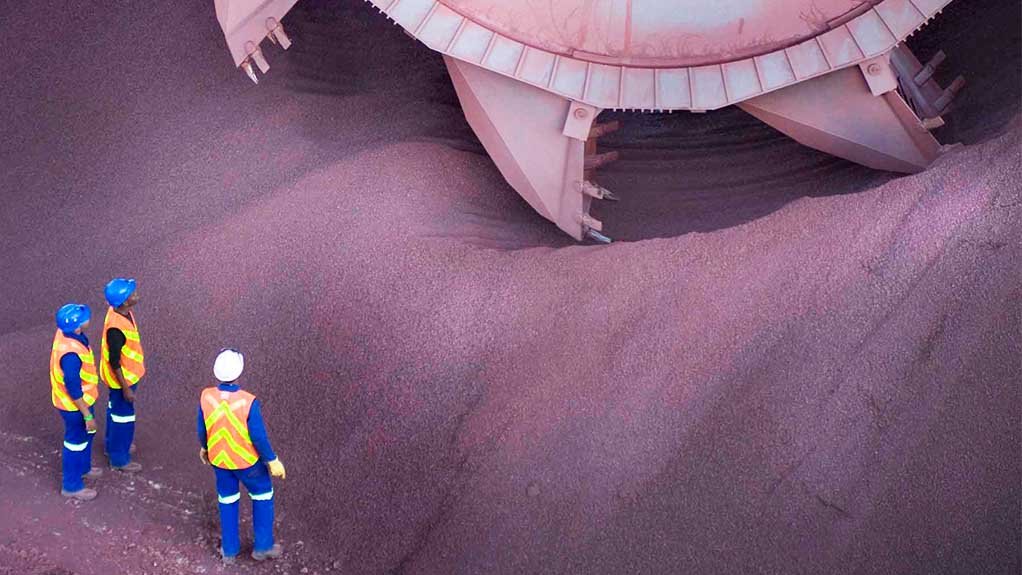
Of this total, $8.6-trillion remains undeveloped.
This is according to the Africa Finance Corporation (AFC), which launched its Compendium of Africa’s Strategic Minerals at the Investing in African Mining Indaba, held in Cape Town this week.
“The compendium maps full value chains and links reserves and production to processing capacity, power and transport infrastructure, and regional industrial corridors – improving data transparency to de-risk exploration, lower the cost of capital, and guide smarter investment into mining and the enabling infrastructure needed for beneficiation and the creation of integrated regional value chains,” says AFC president and CEO Samaila Zubairu.
With the launch of the compendium, the AFC also calls for stronger regional planning, anchored in Africa’s own long-term demand requirements.
Consider the steel value-chain, notes the AFC. Africa hosts world-class endowments of ferro-alloys such as manganese, chromium and nickel, with iron-ore supply entering a new growth cycle. Yet these supply chains remain commercially tethered to Asian steel cycles, rather than Africa’s own development trajectory.
This means that the slowdown in Asian steel demand, linked to China’s property downturn and weaker construction, has transmitted shocks into African mineral markets.
Africa, however, continues to expand its infrastructure and industrial networks that require these materials.
This means that there is a failure to align the continent’s mineral production, processing capacity and infrastructure investment around its own long-term material needs.
The compendium also regards infrastructure as the system that links raw materials, processing capacity and demand, with energy costs, energy reliability, transport connectivity, and access to industrial land ultimately determining the viability of beneficiation.
To this end, the new compendium maps mineral deposits and producing assets alongside railways, ports, power generation hubs and transmission networks in Africa to identify where regional value chains can realistically be developed.
It calls for targeted interventions in shared rail corridors and cross-border power transmission, particularly in mineral-rich regions where coordinated infrastructure could unlock scale, reduce delivered costs and support regional industrial platforms.
Speaking at the Indaba, South Africa’s Mineral and Petroleum Resources Minister Gwede Mantashe warned on Monday that Africa must “speak in one voice and avoid a destructive race to the bottom”.
He said that Europe speaks as the EU, for example, but that Africa’s 54 countries each speak with their own voice. There was, however, more power in acting collectively.
He said Africa owed it to itself to unite, and talk to the outside world as one.
“It’s a long way to go, but let’s try it. Let’s give it a go.”
The AFC was established in 2007. It has 48 member countries and has invested $18.5-billion in 36 African countries since its inception.
Related Articles
Endeavour announces transaction in own shares...
10 Sep, 2024 07:27
Ivanhoe Mines Announces MOU with Government of Zam...
10 Sep, 2024 12:24
Feasibility Study on Lumwana Super Pit Expansion E...
12 Sep, 2024 14:21
Endeavour achieves commercial production at BIOX e...
13 Sep, 2024 08:20
Roscan Gold Announces Changes to the Board of Dire...
16 Sep, 2024 10:40
Minerals Council pays tribute to Pravin Gordhan...
16 Sep, 2024 12:17
Notification of an acquisition of beneficial inter...
18 Sep, 2024 08:39
Newmont on track to get at least $2 billion from a...
18 Sep, 2024 10:49
UAE firm plans to invest $500m in Tanzania...
19 Sep, 2024 08:37