Autres (mines)

Zimbabwe Mining Shift Targets $12 Billion Economy


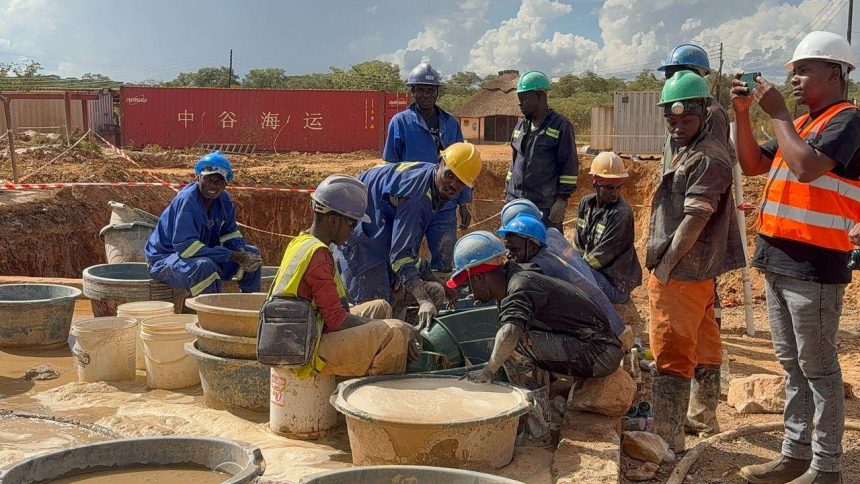
Zimbabwe is accelerating efforts to formalize its artisanal mining sector, with 300 small-scale miners receiving official certification in a government-backed initiative aimed at improving safety, compliance and productivity, while supporting the country’s push toward a projected US$12 billion mining economy.
The certification ceremony, held in Chegutu about 105 kilometers west of Harare, marks a strategic shift in Zimbabwe’s mining policy—from traditional Corporate Social Responsibility (CSR) programs to more targeted Corporate Social Investment (CSI) frameworks designed to deliver measurable economic impact.
The initiative brings together government, private sector players and training institutions in what officials describe as a scalable model for transforming artisanal mining into a formal, regulated industry.
Minister of Mines and Mining Development, Polite Kambamura, hailed the program as a turning point in Zimbabwe’s economic reform agenda under President Emmerson Mnangagwa.
“Allow me to thank Mutapa Gold Resources for this funding initiative,” Kambamura said. “We need to move from Corporate Social Responsibility to Corporate Social Investment. This approach allows us to achieve deeper, more sustainable national development.”
He added that empowering artisanal miners—who form a critical backbone of the gold sector—directly translates into broader economic empowerment.
“Small-scale miners contribute about 60% of deliveries to Fidelity Gold Refinery. When we empower them, we empower the nation,” he said.
Blueprint for National Rollout
Authorities say the Chegutu program is part of a broader national strategy to professionalize the sector through mobile mining schools, which will deliver training directly within mining communities across Zimbabwe.
The model is expected to be replicated nationwide as part of efforts to enhance production standards, reduce accidents and curb informal mining practices.
Mutapa Gold Resources, which funded the initiative, described the certification of the first 300 miners—out of a targeted 1,500—as a critical milestone in transitioning artisanal miners into formal operators.
Chief Executive Officer Patrick Maseva Shayawabaya said the program represents a structural shift in how Zimbabwe approaches its mining economy.
“Turning artisanal miners into formal miners is a turning point for transparency and accountability,” he said. “Where previously these miners operated on the margins, we are now integrating them into the formal economy to contribute meaningfully to national development.”
Safety, Compliance and Inclusion
Training for the certified miners was delivered by the Zimbabwe School of Mines, with a strong emphasis on safe mining practices, regulatory compliance and productivity enhancement.
School Chief Executive Edwin Gwaze said the initiative directly addresses long-standing challenges in the sector.
“This program is designed to improve safety, compliance and productivity,” Gwaze said. “It ensures that miners adopt safer practices, operate within regulatory frameworks and increase output for the benefit of the national economy.”
He also highlighted the inclusion of women in the certification program as a key step toward a more equitable mining sector.
“The participation of women reflects our commitment to inclusivity and transparency in the industry,” he added.
Driving Economic Transformation
Zimbabwe’s mining sector remains central to its economic recovery strategy, with gold playing a dominant role in export earnings. The formalization of artisanal miners is seen as critical to boosting output, improving traceability and attracting investment.
The government’s broader reform agenda under Mnangagwa aims to modernize key sectors of the economy, with mining identified as a primary growth driver.
By transitioning from CSR to CSI, Zimbabwe is signaling a move toward results-driven partnerships that align private sector investment with national development goals—particularly in sectors with high employment and revenue potential.
For many of the newly certified miners, the program represents more than just training—it marks a shift from survivalist mining to structured, sustainable enterprise.
Articles similaires
Endeavour announces transaction in own shares...
10 sept., 2024 07:27
Ivanhoe Mines Announces MOU with Government of Zam...
10 sept., 2024 12:24
Feasibility Study on Lumwana Super Pit Expansion E...
12 sept., 2024 14:21
Endeavour achieves commercial production at BIOX e...
13 sept., 2024 08:20
Roscan Gold Announces Changes to the Board of Dire...
16 sept., 2024 10:40
Minerals Council pays tribute to Pravin Gordhan...
16 sept., 2024 12:17
Notification of an acquisition of beneficial inter...
18 sept., 2024 08:39
Newmont on track to get at least $2 billion from a...
18 sept., 2024 10:49
UAE firm plans to invest $500m in Tanzania...
19 sept., 2024 08:37