
Autres (logistique)

Why DP World is building options beyond Jebel Ali


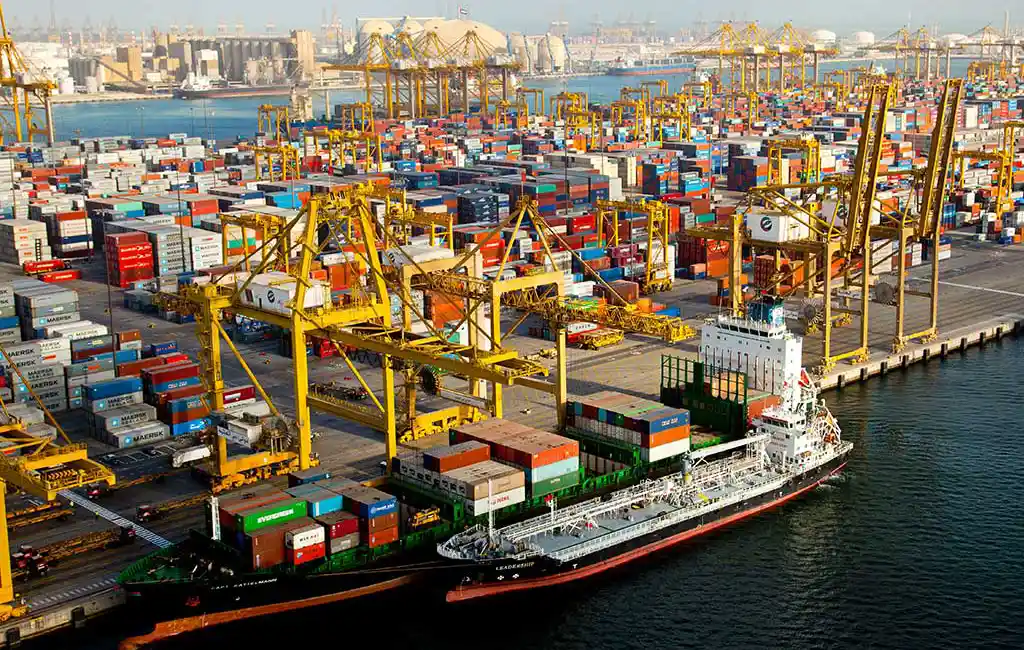
There is no mention of Iran or the Strait of Hormuz in the official press communiqué announcing one of DP World’s biggest investments in decades.
Nor is there any reference to missiles, disrupted shipping lanes or the regional conflict still shaking the Gulf. Yet its impact runs through almost every line.
The agreement to develop two new port facilities on the UAE’s east coast was presented as another investment in logistics capacity and supply-chain efficiency. That is true, as far as it goes.
But senior figures involved in the Fujairah project told AGBI the thinking behind it began not in the strategy department, but in the frantic opening days of the regional conflict that erupted on February 28.
The Iranian attacks on the UAE following the US-Israeli strikes did not reveal a serious vulnerability at Jebel Ali, which was well defended by the country’s armed forces. Instead, they exposed the risks of relying so heavily on a single gateway for a country whose prosperity depends on uninterrupted trade.
The port is still operating at around 10 percent of its pre-war capacity, and will remain so until a reliable ceasefire is in place and the strait reopens.
The answer was not to build a replacement for Jebel Ali – economically unrealistic and strategically unnecessary – but to build optionality, according to those senior figures.
That distinction matters. DPW’s Fujairah initiative is not a “Hormuz bypass”, despite the inevitable temptation to describe it that way. Once complete, the Fujairah developments will add around 2.5 million TEUs (20 foot equivalent units, a common industry measure) of annual container capacity to the UAE — a small fraction of the roughly 15.4 million TEUs handled by Jebel Ali before the war.
Nor are they intended to divert trade permanently away from Dubai’s flagship port. The aim is to give shipping lines, importers and exporters greater flexibility during this conflict and in any future disruption.
The project has two complementary elements. At Dibba, on Fujairah’s northern border with Oman, DPW will substantially expand existing general cargo facilities.
At Al Rugaylat, just south of Fujairah’s oil export and storage complex, it will construct a new deep-water container terminal capable of handling the latest generation of ultra-large container vessels, together with new roll-on, roll-off facilities.
Costing in the region of AED2.5 billion and financed entirely from DPW’s own resources, the investment creates an alternative entry point to the UAE on the Arabian Sea, rather than inside the Gulf.
What makes the project compelling is that much of the supporting infrastructure already exists. Both sites have good road connections into the rest of the UAE, while Fujairah airport offers scope for future air freight development.
In time, Etihad Rail will provide another strategic link between the east coast and the country’s industrial and logistics centres in the Gulf.
Perhaps the most intriguing aspect of the announcement, however, is institutional rather than geographical.
Some observers questioned why DPW emerged as the lead developer when Fujairah has increasingly become associated with Abu Dhabi’s strategic ambitions.
Over the past decade Adnoc has transformed the emirate into the UAE’s principal energy gateway outside the Strait of Hormuz, through the Habshan pipeline, vast oil storage facilities and export infrastructure. A second Habshan pipeline and Etihad Rail will reinforce that role still further.
Rather than competition, the agreement points to a more sophisticated division of labour. Abu Dhabi continues to build and finance the energy infrastructure that underpins the UAE’s hydrocarbons strategy.
Dubai, through DPW, supplies world-class container operations, logistics and global supply-chain management. The result is a neat piece of federal synergy in which each emirate plays to its comparative advantage.
Since the conflict began, DPW has also increased its involvement on the east coast through co-operation with Gulftainer at Khor Fakkan in Sharjah.
Together with the new developments at Dibba and Al Rugaylat, the outlines of an integrated eastern logistics corridor are beginning to emerge.
The commercial logic is straightforward. Shipping lines gain greater flexibility, reduced geopolitical exposure during periods of regional tension, the prospect of lower insurance costs and access to modern port infrastructure. The UAE gains something arguably more valuable than additional capacity: resilience.
War accelerates changes that governments and businesses might otherwise postpone. The conflict that erupted earlier this year appears to have done precisely that for the UAE’s logistics strategy.
Fujairah is not going to replace Jebel Ali, but it will reinforce it. In doing so, it is reshaping the economic geography of the UAE.
Articles similaires

Transport and logistics to the fore in 2026!...
04 mars, 2026 08:39
Trade flows shift as Middle East risks intensify...
04 mars, 2026 11:37
Emirates, Etihad Airways suspend flights as region...
05 mars, 2026 07:45
Shipping charges hike will worsen economic hardshi...
06 mars, 2026 08:58
DHL continues to accept Middle East orders, but wa...
06 mars, 2026 09:02
TIACA confirms Glyn Hughes will step down as Direc...
06 mars, 2026 09:51
Qatar activates Saudi land transit route to mainta...
09 mars, 2026 08:42
Kenya Airways begins airlift for WRC Safari Rally ...
10 mars, 2026 13:01
GLS Group and APM Terminals partner to launch Libe...
11 mars, 2026 08:20