Autres (mines)

Ethiopia Signs $13 Billion Investment Deals Amid Cautious Optimism


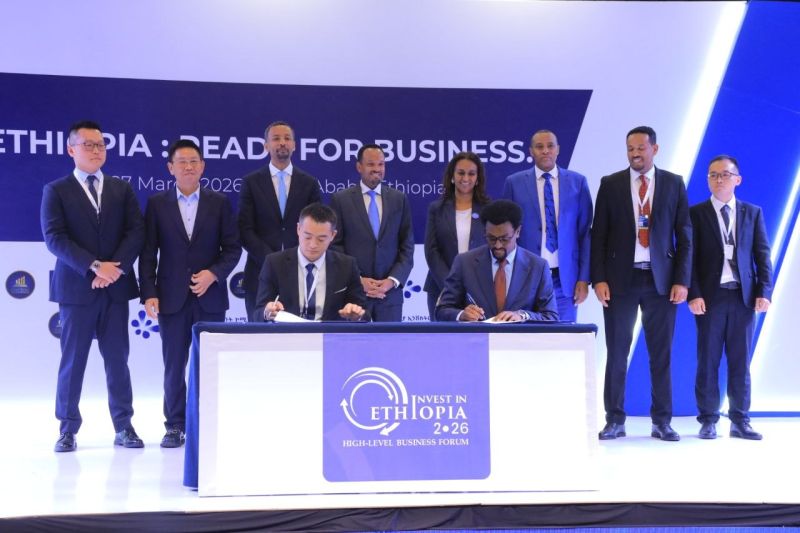
Ethiopia has announced more than $13 billion in new investment deals, but behind the headline figure lies a more complex reality, shaped as much by past disappointments as by future promise.
The agreements, unveiled at the Invest in Ethiopia 2026 forum and confirmed by the Ethiopian Investment Commission, span energy, mining, and manufacturing sectors the government sees as central to its economic transformation. On paper, the scale is striking. In practice, investors are approaching the announcements with caution, mindful of Ethiopia’s uneven track record in turning pledges into functioning projects.
That caution persists despite a clear shift in policy direction. In recent months, the government has signaled a willingness to open key sectors, streamline regulations, and ease longstanding restrictions that have historically deterred foreign investors. The message is one of reform and renewed openness.
Yet external observers remain measured. Reporting by Reuters and Bloomberg notes that many of the deals are still in early stages, often structured as memoranda of understanding rather than binding agreements. The distinction is critical.
“Headline investment numbers can be misleading if they are not backed by implementation timelines and financing clarity,” one regional economist told Reuters, pointing to a familiar pattern in emerging markets where large commitments fail to fully materialize.
What sets this moment apart is the broader reform effort underpinning it. Ethiopia is working closely with the International Monetary Fund on a program aimed at stabilizing the economy, addressing foreign exchange shortages, and restoring macroeconomic balance. Measures such as easing foreign exchange controls and signaling the eventual liberalization of the banking sector have begun to shift investor sentiment.
The World Bank has echoed this cautious optimism, noting that Ethiopia’s long-term growth prospects remain strong, even as structural challenges persist.
“Ethiopia has significant potential, but translating that potential into sustained private investment will depend on consistent policy implementation,” a World Bank analyst observed in a recent briefing. That caveat underscores a central tension: reforms may be promising, but their credibility will ultimately be judged by execution.
The sectoral breakdown of the new deals highlights the urgency driving Ethiopia’s investment push. Energy projects, particularly in solar and renewable infrastructure, are intended to address chronic power shortages that have long constrained industrial growth. At the same time, mining investments in gold and potash are being positioned as a fast track to boosting export revenues and easing the country’s severe foreign exchange constraints.
In that sense, the investment drive is not simply about development, it is about stabilizing a fragile external balance.
Articles similaires
Endeavour announces transaction in own shares...
10 sept., 2024 07:27
Ivanhoe Mines Announces MOU with Government of Zam...
10 sept., 2024 12:24
Feasibility Study on Lumwana Super Pit Expansion E...
12 sept., 2024 14:21
Endeavour achieves commercial production at BIOX e...
13 sept., 2024 08:20
Roscan Gold Announces Changes to the Board of Dire...
16 sept., 2024 10:40
Minerals Council pays tribute to Pravin Gordhan...
16 sept., 2024 12:17
Notification of an acquisition of beneficial inter...
18 sept., 2024 08:39
Newmont on track to get at least $2 billion from a...
18 sept., 2024 10:49
UAE firm plans to invest $500m in Tanzania...
19 sept., 2024 08:37